Showing posts with label NC Summer Camps. Show all posts

Thursday, June 4, 2015

Going The Distance

Green River Preserve’s journey to connect kids with nature


Cordwood Cottage at GRP
"We have to go further" says Executive Director Missy Schenck of Green River Preserve (GRP), a 3,400 acre private wildlife preserve in Tuxedo NC. Before I tell you about where they are going next, let me first point out a few highlights that are #happeningnow. GRP was founded in 1987 as a nonprofit summer camp to connect kids with nature. Through their unique mentor program, campers hike each morning with naturalist guides. One tradition at camp called the "grand slam" includes seeing a bear, a venomous snake, a turkey, and a deer all on a single hike, a rarity which occurs only a handful of times a summer. In a world where it is estimated that 50% of kids born this year will never see the Milky Way (See our post Creating Awe at Camp), it really got me thinking how truly a unique nature experience this is for the kids. Not only does the site include the vast wildlife preserve, it also shares a border with DuPont State Forest, creating the perfect setting to witness a "grand slam"! From the start, GRP has been connecting kids with nature. They have created several outreach programs such as SEE, Muddy Sneakers and Kale.

SEE (School of Environmental Education) is a residential field trip program where schools travel to Green River Preserve for an educational experiences outside of the classroom.

Muddy Sneakers is a separate non-profit organization funded primarily through private donations, grants, and foundations, the outdoor education outreach to schools local to GRP. 5th grade programs from neighboring school counties spend 12 day-long trips connecting with nature in their own backyard.

KALE (Kids Agricultural Learning Experience) is a hands on learning experience based off of GRP's farm.

Even with these existing programs, GRP is still thinking about what is next. Conceived as a response to the proposed No Child Left Inside Act of 2013, "Camp to Go" is GRP's next outreach program.

Congress finds that “Children and young adults are increasingly disconnected from the natural world around them, spending less time outside playing, exploring, and learning. Play and learning in nature is important to the intellectual, social, and physical development of youth.” Read more at congress.gov.

With the No Child Left Inside Act back up for discussion in 2015, camps partnering with schools could become more critical than ever, creating a demand for programs such as Camp to Go. The Camp-School Partnership Survey, conducted by the ACA in 2010, found that there was still much room for improvements between camp and school partnerships. The study found that “Over 88 percent of the camps were not partnering with school districts on educational reform grants or programs, and 90 percent of the camps were not involved with any Title 1, Title 2, or Department of Education programs.” For more statistics, read the article here

While the most common partnership with schools includes a science based curriculum, the article continues to suggest that camps seek new ways to connect with schools, such as partnering with existing "Youth in Government" programs. This reminded me of programing at the YMCA Blue Ridge Assembly. On a site visit last summer I got to see the Youth Conference on National Affairs in full swing.

This is a great example of programming that can be created at your camp to promote partnering with schools. Whether it is youth in government, hands on physics, or nature studies, there are variety of programming opportunities waiting to create lasting partnerships between schools and summer camps nationwide. At its core, camp is about youth development. Partnering with schools is yet another way that camps can positively impact today's youth.

Wednesday, September 24, 2014

Square Footage

At Typical Camper Cabin at Gwynn Valley, Brevard, NC
One design challenge posed to many camps is a question of numbers… and by numbers, I mean square footage. Kids today are growing up in homes that are bigger on average than ever.

According to the US Census Bureau, new homes completed in 2013 averaged 2,598 SF. With the current average U.S. family size of 2.55, this is just over 1,000 SF per family member. Let's compare this to 1950, when the average home was 983 SF and the average U.S. family size was 3.54, leaving 278 SF per person. Back in 2006, NPR's "All Things Considered" tackled this topic in “Behind the Ever Expanding American Dream.”:

"The big house represents the atomizing of the American family," says John Stilgoe, a professor of landscape history at Harvard University. "Each person not only has his or her own television — each person has his or her own bathroom. Some of these houses are literally designed with three playrooms for two children. This way, the family members rarely have to interact. And the notion of compromise is simply out one of the very many windows these houses sport.”

Now consider that the majority of Summer Camps across the country where built before 1960. Where does this leave camp facilities when compared to the expectations of modern campers and parents?

One aspect of camp where this is particularly evident is in the basic camper cabin. There is a growing desire for each new camper cabin to contain bathroom facilities. When you look at the average American home today, this is not surprising. Many kids have their own bathrooms attached to their rooms. How are they expected to walk outside to use the bathroom at camp? Take this private girls' camp in North Carolina for example:

"The bathrooms have every convenience of home (tiled floors, large showers, “power flush” toilets that never clog, double sinks, cast iron hooks for towels, shelves for shower buckets, and endless hot water from tankless water heaters that never run out of hot water). “ - Camp Greystone: Cabin Life

This certainly wasn’t always the case. According to Salomon’s book, Camp Site Development, published in 1959, as a “book intended as a guide to all concerned with the planning and development of Girl Scout camping facilities.” a single bath was only featured as an option for a “Men’s Cabin” for the rare occasion that a dad or boy would need to stay on site." Instead the book features several community shower house plans. This book goes on to outline all aspects of camp facilities. The cabin and shower house are separate entities. This was not only true for Girl Scouts, but for camp facilities across the country. In her book, A Manufactured Wilderness, Van Slyck notes, that the separation between sleeping rooms, and bathhouse facilities in the camping world pre-1960 was also a sanitation concern. Salomon echoes this saying that,

“the idea that campers can be kept clean by an occasional soap scrub in the swimming hole has been pretty well abandoned.” –Camp Site Development, 1959

Salomon goes on to comment that due to the high capital investment of installing showers in each unit, a central shower house was often the best solution. In the late 1950's, planning manuals for other camping organizations, such as the YMCA, echoed this conclusion, establishing the "best practice" for many years of camp design.

As designers, we are often asked what is the best practice regarding building cabins with or without bathhouses. Ultimately, this depends on your camp, your mission, and your program model. What ages are you serving? What are the challenges of unit living within each age group? How are you marketing your camp experience to potential campers? To potential parents? There are advantages to both designs, but with the right guidance, well designed facilities can make your camp the best it can be.


Adler, Margot. "Behind the Ever Expanding American Dream." Audio blog post. All Things Considered. NPR, 04 July 2006. Web. 21 Sept. 2014. .

Salomon, Julian Harris. Camp Site Development. New York: Girl Scouts of the United States of America, 1959. Print.

Van Slyck, Abigail. A Manufactured Wilderness: Summer Camps and the Shaping of American Youth, 1890-1960. Minneapolis: U of Minnesota, 2006. Print.

Wednesday, September 3, 2014

The Magic Tree House

The Tree House at Sanborn Western Camps
I recently watched an episode of Tree House Masters in which they claimed to “capture the essence of summer camp in a design…” I am not sure I agree, but they did create an awesome tree house complete with a rock wall, archery targets, and, of course, bunk beds. While the show is entertaining, this also got me thinking about how the tree house relates to summer camp.

Camp is about instilling a sense of wonder and appreciation for the great outdoors. And, in a way, so are tree houses. The way in which these spaces instill this appreciation is through teaching what the great outdoors are about.

What are camps teaching? If you have read anything about the value of camp recently, you have probably heard the argument for camps teaching "21st century skills". Often referred to as the “Cs” : Critical Thinking, Creativity, Communication, and Collaboration. Many camps have their own take on these skill sets, but the general principles are the same. Camps argue that these skills are crucial to youth development, and are not being taught in the traditional education system.

“Skills like curiosity — one’s drive to know, sense of wonder, and ability to stand in awe — need to be embraced and not squashed by premature demands for compliance. Imagination must be protected and encouraged. The desire to investigate, inquire, question, and study will need to be valued, both at work and home. These precursors will be critical to our future success as individuals, communities, and a country. And, they can all be found in a quality camp experience. “  
–Peg Smith "Camp and 21st Century Skills: Oxymoron or Ideal?" 

So how do we cultivate a landscape to teach these very skills? The idea that the traditional education environment is not providing the skills needed for the next generation of leaders is nothing new. Charles Eliot, former president of Harvard University, wrote in 1922:

"I have the conviction that a few weeks in a well-organized summer camp may be of more value educationally than a whole year of formal school work.”

To return to the parallels between summer camps and tree houses: both idealize the child’s sense of wonder. Roper Mountain Science Center Association recently hosted a competition to design and build the ultimate cool green tree house to foster a child’s imagination. These designs captured a space that teaches wonder, something that the camp landscape should strive to create. (The design finalist can be seen here!) Many camps have capitalized on the playful nature of camp with great tree house designs. Take Camp Twin Lakes in Georgia, for example. Opened in 1993 to serve children with serious illnesses, disabilities and other challenges, the camp's treehouse - known as the “Wild Side” - is nothing short of magical. To see more photos of tree houses at summer camp click here!)


The Wild Side Tree House at Camp Twin Lakes
A well-written camp blog post from North Carolina's Green River Preserve recently quoted poet Mary Edgar:

“Youth sometimes outgrows the thrill of surprise, or assumes a blasé attitude, while adults often lose completely the glory and luster which wonder gives to life, and it becomes for them dull and monotonous. Yet there are many fortunate individuals who continue to experience all through their lives the adventure of living. They behold a universe so vast and amazing that the only possible response is an attitude of surprise and expectancy.”

The post goes on to articulate the sense of wonder in youth… something that camp designs strive to create and inspire in campers each and every summer. Whether it’s camps or treehouses the goal is to design a space that instills a sense of wonder and eagerness to learn in the next generation of campers.


Smith, Peg. "Camp and 21st Century Skills: Oxymoron or Ideal?" Parents & Families. American Camp Association, 23 Feb. 2012. Web. 27 Aug. 2014.


Wednesday, July 30, 2014

Conservation What?... Conservation Easements and Summer Camps.

According to the American Camp Association, 1 in 5 camps have conservation easements in place. What is a conservation easement, you ask? A conservation easement is a way for camps to protect their property from unwanted future development. For many camps, their property was purchased nearly 100 years ago for a fraction of the value of the land today. This can pose a big problem for camps, as current land values can mean large property and estate taxes. Consequently, camp owners face unique challenges arising from the ownership of significant parcels of land.

One solution to this dilemma is a conservation easement. With a conservation easement, the property owner sells the development rights to a land conservancy. Crafted to suit the particular camp’s situation, this creates opportunities for camp owners. Here are several benefits of selling development rights.

Income Tax Savings: A for-profit camp can enjoy significant federal and state income tax savings from donating a conservation easement on portions of the camp property.

Transition and Estate Planning: Camp owners planning for the transition of the camp to their family’s next generation or planning for their estates can reduce the taxes involved in such transitions by incorporating a conservation easement.

Acquisition: conservation easements can be creatively implemented to facilitate the purchase of a camp property.

Disposition: If the sale of a camp for another use is required, planning for a conservation easement, along with a creative development concept can be an effective marketing tool which can help cultivate alumnae as potential buyers for personal or collective use.

Raise Capital: In some instances, federal, state or local money may be available to purchase conservation easements from camp owners.

Camp Protection: A conservation easement will stand to protect the environment in case camp property is ever sold.

Green River Preserve, near our offices in Brevard, NC, has over 2,600 acres in conservation easement standing. For Green River Preserve, their conservation easement greatly reduced their property and estate taxes, and they received cash from the State of North Carolina through its Clean Water Management Trust Fund and other funding sources due of the camp’s ecological value. And, best of all -- campers can continue to be campers, as if nothing has changed, according to Sandy Schenck, the founder of Green River Preserve.

What can a Conservation Easement do for your camp? Learn more from? The Carolina Mountain Land Conservancy here! (there are also similar conservancy groups in each state). Camps should consult with their legal and accounting teams before pursuing any conservation easements.

Wednesday, July 23, 2014

Welcome to Camp...(nice maintenance shed)

It’s opening day and the camp looks beautiful! Every detail, from the check-in table to the new canoes lined up in the lake, is perfect. Parents are driving into camp, awed by the serenity of this other world. But what about that building? Ugh! It’s the maintenance shed.

After visiting hundreds of camps, one thing that stands out to us is the placement of the maintenance shed, a common problem. Perhaps, as people who design camps, we are more sensitive to this, but we still can't help but wonder why would maintenance sheds have the privilege of being the first building visitors see. Programmatically, the maintenance shed is “back of the house,” but in more cases than not, it is near the entrance to camp. We think this is just a small part of a bigger issue centering around the design of the entrance to camp.

As a majority of camps across the country were established nearly 100 years ago, perhaps the entrance is just as it has always been: the dirt road off the main road that transports you into the camp world. Some entrances are long, others quite short. Let’s take a look at what creates a successful entrance.

1. The entrance must be defined. A large welcome sign or sign with the camp logo, and landscaping are all aspects of a well-defined entrance. 


The entrance to Grizzly Creek Ranch


2. The entrance must “set the mood” for camp. Find ways to incorporate the “camp feel” right off the bat. 


Camp Pinnacle counselors setting the mood for an amazing summer
on opening day. 


3. The entrance road is a chance to showcase what makes your camp unique. This is your first impression on parents and campers. Be sure it’s a great one! 


The entrance to Camp Sea Gull was strategically designed to wind through
the camp's Golf Course, showcasing a beautiful feature of camp. 


Monday, July 21, 2014

Camp Ridgecrest and The Little Chief Challenge


I will admit: venturing just a couple miles from Camp Crestridge and onto an all-boys camp was a little intimidating at first. But after pulling up to the office building and meeting Phil, Camp Ridgecrest’s full-time director, I realized how ridiculous that thought was.  I asked the same of Phil as I asked all of the other previous camp directors- if he would be kind enough to show me what makes Camp Ridgecrest unique.  I was interested to see the difference in dynamic, as I shifted from an all-girls to an all-boys camp.

Basketball Court
The first building I entered was the dining hall.  It is actually one, if not the largest vertically-standing log cabin-type buildings in this part of the country. You see, the majority of cabins have logs laid horizontally, while this building's logs stand on end. It is a really unique site to see.

Their lake had TWO blobs!
Another interesting feature was how impeccable their lake was - equipped with not one, but TWO “blobs”, and plentiful kayaks and canoes.  Sharon, back at Crestridge, had told me about this lake, but I didn't fully understand the excitement until actually seeing it.

One tucked-away area that we almost walked past was a small chapel. There were maybe ten benches for small groups to come after breakfast and have devotionals.

Outdoor Chapel
Lastly, Phil explained to me something called the “Little Chief Challenge".  "Little Chief" is the highest rank attainable by a camper. Though, attaining the title sure isn't easy. Eligible campers are woken up at midnight and have to perform a series of assignments.  They have 18 hours to complete numerous physical and mental tasks... without making a sound!  The challenge entails:

a.     Building, starting, and maintaining a fire for 6 hours
b.     Run up Mt. Kitazuma, always remaining in between two other runners (who are constantly being replaced)
c.      Reflect on the meaning of these previous tasks at a devotion center
d.     Write a 1500 word essay after breakfast with the topic, “What Camp Ridgecrest Means to Them” which is to be completed by lunch time
e.     Perform various grueling physical labor tasks

Whether your make it to the 6 PM cut-off or not, the underlying lesson of the "Little Chief Challenge" is that we must fail in order to grow.  Only 3-4% actually complete the challenge, but everyone is right there by your side if you fail.  They are surrounded by an incredible support system and THAT is the true lesson. Thank you, Camp Ridgecrest for an amazing adventure!

Thank you, Camp Ridgecrest!


-The Girl with the Red Umbrella

Monday, July 14, 2014

Paint Wars and More at Camp Crestridge

Thursday was a busy but adventurous day.  An hour down the road was my next stop to two camps: Camp Crestridge and Camp Ridgecrest.  Crestridge is an all-girls camp while Ridgecrest is all-boys.  They are both under the executive management of Ron Springs and are right next to each other.  I headed to Camp Crestridge first and was greeted by Sharon, the program director.  Her lively spirit assured me that I was in for a fun tour.  I requested that she show me everything at camp that makes them unique, and she did just that.

The dining hall was under renovation due to the growing number annual campers, but it still kept that “home away from home” vibe.  Sharon continuously mentioned how much the camp was growing.  More and more girls were wanting to partake in the summer camp experience, and she was thrilled!

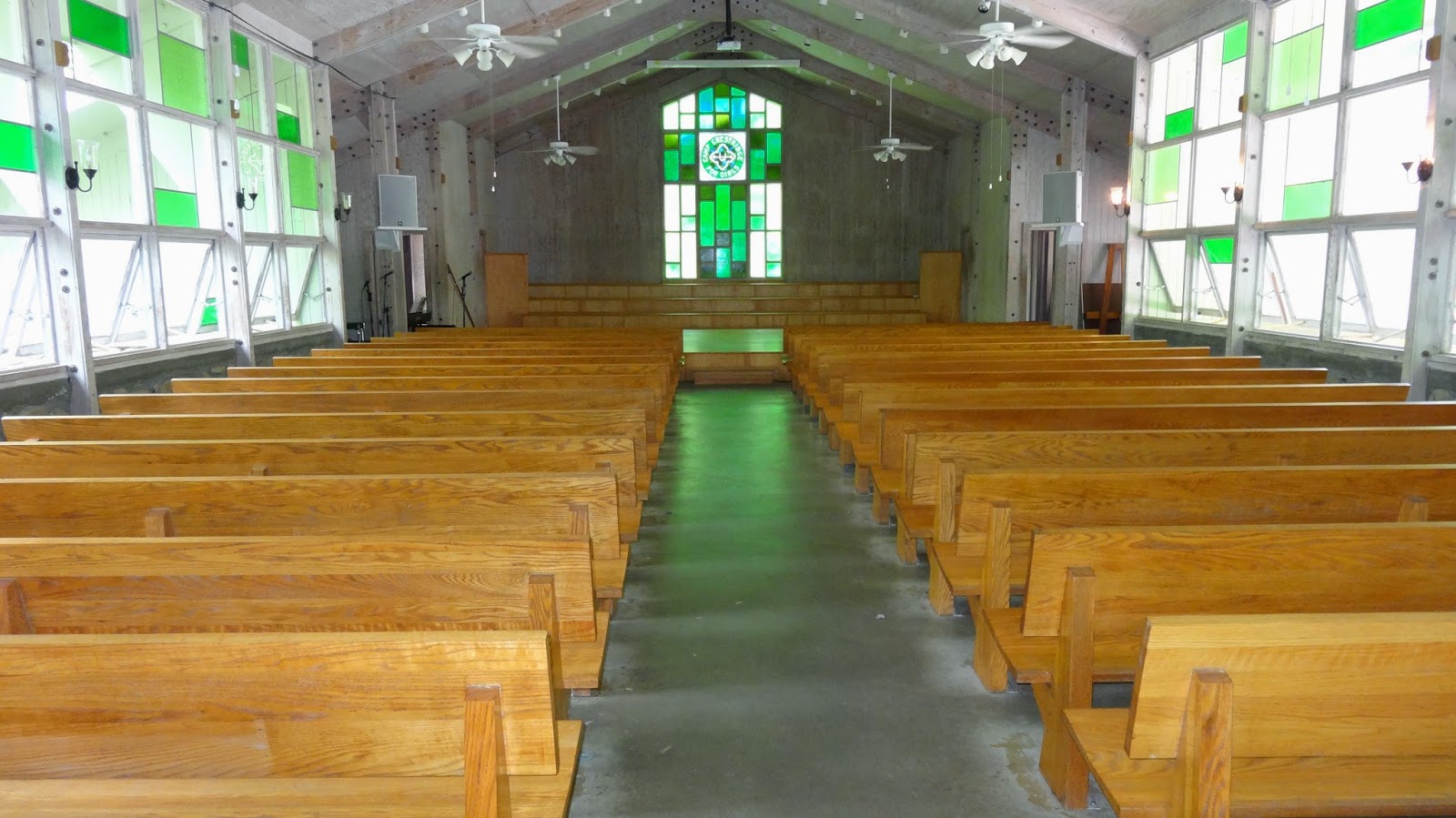
The chapel, beautifully adorned with green and white stained glass.
Another extremely unique and beautiful structure was their chapel.  It was definitely a unique building, with a stunning stained glass focal point at the altar.  Renovations were also under discussion in order to accommodate the (growing) amount of campers.

The paint war is definitely a favorite!
I grew anxious as Sharon informed me about the next activity; something that I haven’t encountered at camp before: paint wars!  Each camper (there were about 70 on this day) is given a white t-shirt and as soon as the music starts, they completely let loose and throw washable paint onto each another.  And what is a paint war without a slip-n-slide?

Lastly, the most interesting building of all was the museum, which was only made possible by funds from alumni.  It contained miscellaneous collectibles from years' past.  What an everlasting way to remember history!

The museum that was built thanks to numerous alumni donations. 
Seeing the youth, especially young girls, bond with one another and create new friendships is surely refreshing.  Merely being in their presence evokes a smile that you can’t quite replicate anywhere else.  The positive and judgment-free atmosphere is contagious.

Extending my deepest gratitude to Sharon and Camp Crestridge is the least that I can do for allowing me a taste of their way of life, and I wish them all the best. Next stop: Camp Ridgecrest!


Thank you, Camp Crestridge!
-The Girl with the Red Umbrella

Monday, July 7, 2014

Camp Illahee: The Land of Jolly Fun

My introduction to Illahee actually started before I even set foot on the 110 acre site. It began on Dolly's front porch, where I was soaking in the mountain summer night.  For those of you who don’t know Dolly, Her Ice Cream is nothing short of a legend in Brevard. Of course there are the standard flavors: (chocolate, vanilla, strawberry, etc.) but there is also High Rocks Arctic Slide, Illahee Swirl, Kandalea Avalanche, Keystone Sunrise, Merrie-Wood Boo-Woop, Pinnacle Paradise, Pisgah Perfection.. the list goes on. Each local camp has its own specialty flavor. Yes, yes, ice cream is amazing, but I digress. 

I was sitting on Dolly’s front porch, in a rocking chair enjoying my Music Camp waffle cone (read: coffee ice cream filled with cookie pieces, a touch of coffee swirls and just the right amount of chocolate flakes), when two buses filled with about 40 Illahee campers pulled up. The girls, in their PJs, were out for a late-night treat. Their smiles, genuine happiness and excitement was contagious.

So when I arrived at camp Illahee, I already had some idea of the magic in the air. I met Kris, the assistant camp director, who led me around the camp. Near the entrance are Illahee's tennis courts. Now, these are not you average camp courts; these are the real deal. Equipped with ball carts and automated feeding machines, and a fierce tennis program, there is always a match being played.


As we continued our tour, we stopped by the craft shop in full swing. Girls were working on everything from pottery to bracelets. Making our way across camp, I hear shrieks of joy as campers zip down the zip line. The zip line and high ropes course starts about 50' in the air from the climbing tower known as the Beanstalk. Cabins are scheduled for the Beanstalk once a session. This is a great opportunity to build confidence and cabin community. Another unique feature at Illahee is the tunnel. This tunnel allows campers to safely cross under the camp's main road. The tunnel is approximately 7 feet tall. What a creative solution to cross the road!

In truth, I think the camp welcome song describes the camp's energy and joy quite nicely.

"Welcome to Illahee
the mountains echo welcome to thee
Where bowers of flowers that bloom in the sun, old campers, new campers, guests and everyone,
Oh welcome to our land of jolly fun,
We are happy you have come,
To our guest we'll give a cheer!
Welcome welcome welcome! HEY!"

Camp Illahee is focused on developing girls with 5 essential qualities: confidence, conviction, integrity, faith in God and abiding respect for the natural world and all its wonders. And it shows through the welcoming nature, the magic in the air, and the sound of singing carrying across the lake -- it's all here at Illahee.

-Girl with the Red Umbrella 

Wednesday, July 2, 2014

Did You Wash Your Hands?

This is possibly one of the most asked questions by a camp counselor. Coincidentally, it's also the most lied about answer.So what’s the solution? How do you get kids to wash their hands before meals?

After a summer of the Norovirus or the infamous swine flu, many camps have taken a second look at their hand washing procedures. The trouble is trying to make this process as efficient as possible. From a programmatic perspective, some camps have built in a specific time block, usually 15 minutes before meals, for hand washing. This works well if groups are on time to the bathhouse, but can prove to be logistically difficult to accomplish. Using hand sanitizer is a faster solution that many camps have adopted. It’s certainly good in a pinch, but studies show that this is not a replacement for hand washing.

The best solution  we’ve seen at many camps is to create a hand washing station outside the dining hall, where campers queue before meals.  This efficiently combines program without wasting time. It's also a great chance to keep an open mind and creative when imagining what a sink can be. Check out these innovative ideas below from camp Timberlake, Gwynn Valley, and YMCA Camp Greenville.


Hand washing at Camp Timberlake
With creative design solutions like these, you can be sure that kids will want to wash their hands!

Hand washing at Gwynn Valley
Hand washing at YMCA Camp Greenville


Monday, June 30, 2014

YMCA Camp Greenville: The Tradition Continues

YMCA Camp Greenville is located right on the border of North and South Carolina near Brevard, North Carolina. Currently in its 102nd year of camping, Camp Greenville has quite the history.  In 1925 Camp Greenville moved to its current site. Camp Greenville sits on 1,400 acres, making it the 5th largest YMCA camp in the country. Originally, Camp Greenville was an all boys camp while the YWCA operated camp Burgess Glen, until the late 1970s. In 1980 the Camp Greenville became coed. Today, Camp Greenville offers one-week sessions to approximately 200 boys and girls per week. The Camp Director, Rick Burris, recently showed me around the camp.


Inside The Lodge
The most tangible pieces of Camp Greenville history are located in the Thomas F. Parker Lodge, originally built by John M. "Uncle Johnny" Holmes in the late 1920s. At the time Uncle Johnny was a member of the Rotary Club and sent letters to Rotary members asking for artifacts from around the world. The amount of history in that building was much more that I could take in during my short visit! Rick pointed out a few of his favorites, including a letter from Gandhi.


As I was walking up the hill towards the seemingly spontaneous dance party that was happening in the airnasium for class change, I spoke had a chance to talk with a returning camper. When I asked him what the coolest thing at camp was, he said the “Monk Secret” of course. Clearly, I needed an explanation.  Becoming a Monk Old Timer is an honor for 5th year campers. The campers explained to me that you can’t really know the secret unless you are a Monk. The tradition got its name from Monk Mulligan, the camp director from 1944-1967. Part of the tradition is a special camp shirt, like the ones below -- the meaning is only known to fellow Monk’s Old Timers.

Photo credit: YMCA Camp Greenville
As I was headed back to the main office, the campers were enjoying the beautiful day swimming at the lake. As I took in the magic of camp, I saw the signs across the lake reading "Be a Great Boy / Be a Great Girl” and I asked if that was the camp motto. Rick said yes, and told me the story behind the saying. The story goes like this. When  Teddy Roosevelt was asked how to be a great man, he replied with, "First you must be a Great Boy." From there the tradition was born and continues today. As I was leaving I even heard the song:
    "Be a Great Boy
     Be a Great Girl
     Be a child of the Lord; it’s the greatest thing in the World
     Do you know the Monk?
     Do you know the man?
     Do you know the power of God is right there in your hands?  
     In your hands…"
The spirit of camping at Camp Greenville is alive! On my way out of Camp, I had one last stop. Pretty Place Chapel. Campers use this place for special chapel services throughout the week. The views were stunning. As I sat on the first row I was thinking about how important this place is to Camp Greenville.  With over 100 years of camping, I wondered how many campers have sat in this chapel. It's amazing how one place can have such an impact on a young person’s life.

-The Girl With the Red Umbrella

Tuesday, June 24, 2014

The Keystone Total Girl

Celebrating its 100th year in 2016, Keystone Camp is an all-girls camp located just a short drive (or bike ride) away from downtown Brevard, North Carolina. The 51-acre site is home to 220 girls per week. Keystone Camp's director, Page Ives-Lemel, is a fourth generation Keystone director. Page grew up at camp and her passion for Keystone is contagious! The camp's mission is to support and develop the Total Girl.

So what makes the Total Girl? Keystone stresses the individual character of each girl at camp. In the small camp setting, each girl has the chance to shine. With over 20 activities from A Cappella to Yoga, with Archery, Horseback, and many more in between, Keystone is about being you!

With the filming of the Hunger Games in nearby DuPont State Forest, Archery is an ever popular activity. The girls even wear the popular “Katniss” braid during archery competitions. Keystone is also known for its Horseback Riding Program. With three riding rings, six miles of trails, a hunt course, and several large pastures, girls can ride every day.


At Keystone, there are no age divisions. Campers learn and play with campers of all ages. It's about creating community. Page even places campers at designated dining tables based on what they have in common. It's about getting the conversation started and building relationships that last a lifetime.


As the oldest girls' summer camp in the Southeast, the history and tradition is alive, but the camp is not standing still. Under Page's leadership Keystone is continually moving forward. In the last few years, many buildings have been replaced, property has been consolidated to protect camp, and the landscape is full of beautiful flowers. Camp has a long tradition of counselors sleeping in a loft above the girls in each cabin.  This allows the girls to feel like they have their own space, while counselors can still see and hear the girls from above. The new cabins which have been built in the past few years still maintain this tradition.

Keystone Camp for girls strives to develop the total girl on an individual basis. From their programming to their facilities to the smiling faces of the campers, this message speaks for itself.

Thank you for an enriching experience, Keystone Camp!


- The Girl with the Red Umbrella


Monday, June 16, 2014

Gwynn Valley Camp: Sustainability at its Finest

Gwynn Valley Camp is located just south of Brevard, North Carolina in the Blue Ridge Mountains.  As the camp is renowned for its sustainability efforts, I was eager to see their green initiatives in action!  Anne and Grant Bullard, the two camp directors of Gwynn Valley, were kind enough to show me around the camp last week.  Anne and Grant have a strong passion for the outdoors, as well as for the intellectual growth of children, and these passions are evident throughout Gwynn Valley.  The rest of the staff comes from around the world – which makes for a diverse, inspiring atmosphere for the kids as they learn to develop appreciation for others as well as themselves.

Gwynn Valley's water mill supplies power all throughout camp.
The most visible sustainable initiative at Gwynn Valley is their historic water mill, which supplies energy to the camp.  Built in 1890, the mill is situated on the edge of a lake where a mountainside creek meets the lake.  The water running down from the mountains generates hydropower that is delivered to many of the camp buildings.

Four wood burners provide the camp with even more renewable energy.  The enticing scent of burning hickory and oak permeated the air throughout the camp – just an added bonus for being green!  Gwynn Valley uses these wood burners to heat up to 70% of their water.

Food production at Gwynn Valley Camp is also highly sustainable.  I was surprised to learn that Gwynn Valley grows up to 70% of their food on-site, including beef and eggs!  There is also a food mill that campers can use to grind corn into cornmeal – and better yet, to churn their own ice cream… YUM.  Currently Anne and Grant are searching for a solution for food waste disposal; they are exploring the option of using Black Soldier Fly Larvae to speed the food decomposition process – and afterwards, the nutrient-rich larvae can become a healthy meal for Gwynn Valley’s chickens.

Thoughtful design solutions, like the ones described above, were all throughout camp.  The walls of the horse barn were even designed to collapse to create winter storage areas for bikes and kayaks – simple, but clever.  And how could I forget the lightning detector?  Grant and Anne decided to invest in a lightning detector as a safety measure; this device can send a signal to the camp staff that alerts them when it is unsafe for outdoor activities.

The stable walls collapse,
enabling more storage.
My first visit was a success!
Thank you, Gwynn Valley!

Gwynn Valley Camp is clearly a place where the three pillars of sustainability (people, environment, and economy) come together. The camp offers a rewarding social experience for campers, earth-friendly initiatives that respect nature, and efficient practices that save time and money for the camp.  Learn more about Gwynn Valley Camp by visiting their website here!

- The Girl with the Red Umbrella


Wednesday, June 11, 2014

food·ie

noun \ˈfü-dē\

: a person who enjoys and cares about food very much
:  a person having an avid interest in the latest food fads

In today's world, food has taken on a whole new meaning. Social Media is full of yummy treats and gourmet creations, created as much for the pic as the palate. Words such as "foodie" are being used to describe the Millennial Generation. As food takes the spotlight in social media and culture, it is no wonder that campers are interested in cooking at camp. In short, Home Economics is now what the cool kids are taking.

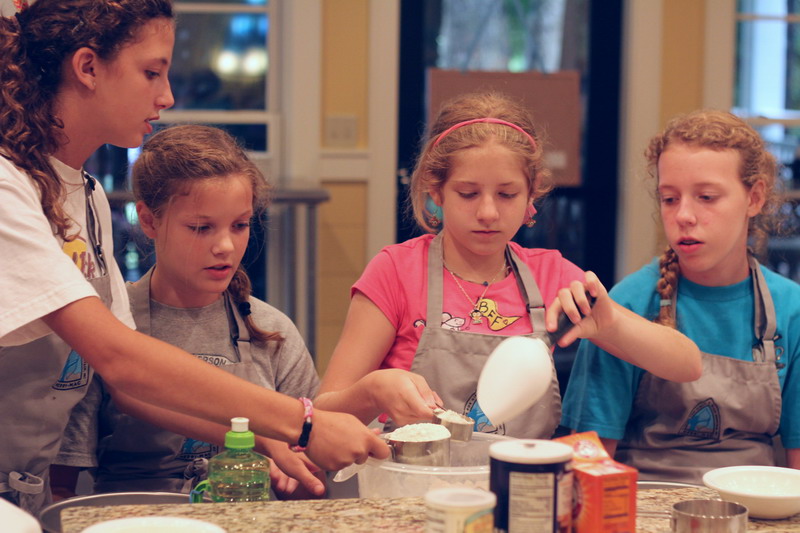
Many camps are adding cooking classes to camp activities. Kids are getting excited about cooking spaghetti, making pies, and baking bread. This poses the design challenge of creating a successful cooking classroom. While using the Camp's Dining Hall Kitchen may not be practical or safe, could a separate, smaller facility be set up for campers? Many camps are building unique cooking classrooms to accommodate the "foodie generation". 

Earlier this year our Camp Design team visited the cooking classroom at Camp Merri-Mac in Black Mountain, North Carolina. During our visit, Director Adam Boyd shared that cooking is one of the most popular activities at camp.  You can learn more about Camp Merri-Mac's cooking program here

The Cooking Classroom at Camp Merri-Mac in Black Mountain, NC
When designing a cooking classroom, there are a few things to consider. How many campers should attend each class? Is food storage separate from your main camp kitchen? How will clean up work? Below are some keys to a great cooking classroom design. 

1. Create a demonstration area large enough for all campers.

2. Spread out appliances, so that not all campers are in the same area.

3. Plan for clean up. (Like Arts and Crafts, this is an essential step.)

4. Provide flexible space depending on appliances needed. Stainless steel rolling tables are a great solution to this.
 

With careful planning and a full understanding of the programmatic needs of the cooking classroom, your camp can successfully host culinary activities.