Showing posts with label Our Favorites. Show all posts

Friday, January 9, 2015

Kids Making Things Happen

All photos courtesy of Beam Camp

Floating Creatura
The title of today’s post is taken from the tagline of Beam Camp. Located in New Hampshire, the camp focuses on developing “capacity for craft, collaboration and compassion through practice of fine and manual arts, innovative thinking, design, creative process, story-telling, building and engineering.” At Beam Camp, staff members include professional architects, videographers, builders, engineers, designers, and creators. Campers have a unique opportunity to work alongside these creative professionals and develop their own creative skills. I first learned about this camp after reading an article featuring them on designboom.com.

Of their various projects shown on their website, I was most intrigued by the latest project, titled “Floating Creatura.” This project is a 20’-long, human-powered floating vessel. The vessel is propelled by a human-sized hamster wheel, bike pedals, and large metal paddles, and is entirely constructed by kids. This brings a whole new meaning to the idea of what kids can create at camp. Read the full article here.

Beam Camper Cabin
The camp’s program focuses on a variety of skills and activities that develop each child’s creative side. Located in New Hampshire on 100 acres of wooded forest, the facilities are also quite noteworthy. The camper village is constructed of nine wood-frame cabins, each with unique floor-to-ceiling screens -- a welcome break from the traditional camper cabin. While their highly-creative, camper-made projects catch the eye of design blogs, the camp also offers some of the more-traditional camp activities, such as swimming and canoeing. As both a design professional and camp enthusiast, it is exciting to see a camp combining the two interests to create a unique experience, helping to develop the next generation of creative thinkers.


Wednesday, September 3, 2014

The Magic Tree House

The Tree House at Sanborn Western Camps
I recently watched an episode of Tree House Masters in which they claimed to “capture the essence of summer camp in a design…” I am not sure I agree, but they did create an awesome tree house complete with a rock wall, archery targets, and, of course, bunk beds. While the show is entertaining, this also got me thinking about how the tree house relates to summer camp.

Camp is about instilling a sense of wonder and appreciation for the great outdoors. And, in a way, so are tree houses. The way in which these spaces instill this appreciation is through teaching what the great outdoors are about.

What are camps teaching? If you have read anything about the value of camp recently, you have probably heard the argument for camps teaching "21st century skills". Often referred to as the “Cs” : Critical Thinking, Creativity, Communication, and Collaboration. Many camps have their own take on these skill sets, but the general principles are the same. Camps argue that these skills are crucial to youth development, and are not being taught in the traditional education system.

“Skills like curiosity — one’s drive to know, sense of wonder, and ability to stand in awe — need to be embraced and not squashed by premature demands for compliance. Imagination must be protected and encouraged. The desire to investigate, inquire, question, and study will need to be valued, both at work and home. These precursors will be critical to our future success as individuals, communities, and a country. And, they can all be found in a quality camp experience. “  
–Peg Smith "Camp and 21st Century Skills: Oxymoron or Ideal?" 

So how do we cultivate a landscape to teach these very skills? The idea that the traditional education environment is not providing the skills needed for the next generation of leaders is nothing new. Charles Eliot, former president of Harvard University, wrote in 1922:

"I have the conviction that a few weeks in a well-organized summer camp may be of more value educationally than a whole year of formal school work.”

To return to the parallels between summer camps and tree houses: both idealize the child’s sense of wonder. Roper Mountain Science Center Association recently hosted a competition to design and build the ultimate cool green tree house to foster a child’s imagination. These designs captured a space that teaches wonder, something that the camp landscape should strive to create. (The design finalist can be seen here!) Many camps have capitalized on the playful nature of camp with great tree house designs. Take Camp Twin Lakes in Georgia, for example. Opened in 1993 to serve children with serious illnesses, disabilities and other challenges, the camp's treehouse - known as the “Wild Side” - is nothing short of magical. To see more photos of tree houses at summer camp click here!)


The Wild Side Tree House at Camp Twin Lakes
A well-written camp blog post from North Carolina's Green River Preserve recently quoted poet Mary Edgar:

“Youth sometimes outgrows the thrill of surprise, or assumes a blasé attitude, while adults often lose completely the glory and luster which wonder gives to life, and it becomes for them dull and monotonous. Yet there are many fortunate individuals who continue to experience all through their lives the adventure of living. They behold a universe so vast and amazing that the only possible response is an attitude of surprise and expectancy.”

The post goes on to articulate the sense of wonder in youth… something that camp designs strive to create and inspire in campers each and every summer. Whether it’s camps or treehouses the goal is to design a space that instills a sense of wonder and eagerness to learn in the next generation of campers.


Smith, Peg. "Camp and 21st Century Skills: Oxymoron or Ideal?" Parents & Families. American Camp Association, 23 Feb. 2012. Web. 27 Aug. 2014.


Wednesday, August 13, 2014

Hello Again

A Page From Greg’s Sketchbook…


A sketch of Camp Albemarele from the master planning process
Camp Albemarle is the third master planning partnership between Lloyd Griffith and Greg Copeland. They worked together at Camp Becket in the 1980s and Camp Sea Gull from 1994 to 2002. After Lloyd and his wife Cille retired from their roles as directors of Sea Gull and Seafarer, Lloyd transitioned to the ministry at the First Presbyterian Church in New Bern, North Carolina. Having left one of the largest YMCA camps in the United States, they were able to successfully translate their experience to this small site along the bay. As this camp is in touch with the sea, Greg and Lloyd both see much potential and many possibilities in Camp Albemarle.

Established in 1953, Camp Albemarle is a year-round mission-driven center dedicated to serving children, youth, families, and adults of all faiths and denominations. Their mission is to provide safe, fun and meaningful activities that allow campers, families and adult guests to build relationships with peers, staff, and God. With 61 years of service, Camp Albemarle has reached 40,000 campers. With 700 connections to Christ each summer, Camp Albemarle is connecting in a big way. They are blessed with a wonderful site on the sea, which serves as the basis for their distinctive ministry.

Camp Albemarle is located on 29 acres on Bogue Sound, in Newport, North Carolina and is bordered by Highway 24 to the North. Two vacant parcels border the east (8.6 acres) and west (7.2 acres ) sides of the property, both consisting of heavily wooded areas with dense understory plants. The southern boundary includes over 1,125 linear feet of shoreline and the views across the sound extend 2.5 miles to Indian Beach and Emerald Isle.

Camp Albemarle includes 21 buildings used for operations, staff housing, camper housing, and programming. The pier, which should have been the original focal point of the camp, was severely damaged by hurricanes and needed to be totally rebuilt. The Master Plan proposes replacing several buildings in order to meet the development objectives. It is understood that although changes of this magnitude would be difficult, it is a once in a lifetime opportunity to build facilities that will match the natural glory of the site and fulfill the mission of Camp Albemarle.

The key to the success of the Master Plan is the development and celebration of the waterfront. The most unique aspect of this site is the water. Salt-water based camps are rare throughout the country, making Camp Albemarle a very attractive site on a national level. It is essential that the waterfront program reflects this significance. This translates into the designing for a state-of-the-art pier, a diverse boating program, opportunities for fishing, aquatic studies, and travel across the sound to the many public resources on the islands. The plan maintains the natural beauty and spiritual significance of the Vesper Dell, the camp's outdoor chapel. 


The Master Plan is arranged so that the camper housing is in a continuously linear form, giving each cabin a prime view of the waterfront. Four other areas, also centered on the waterfront, have been further developed within the Master Plan, including a day camp area, land-based activities area, the waterfront area, and facility-based activities.

Camp Albemarle pier
The new pier was completed in 2009. The first element of the Adventure Course and Alpine Tower was added in 2012. The camp also has an extensive and technical tree-climbing program with 3,000 tree climbs per summer. Albemarle is currently working on developing the Day Camp Area.

Tips from Greg’s Sketchbook:

1. Put your best foot forward. In this case, that means using the water as a central focus for the camp’s Master Plan. 


2. It’s about relationships. When Greg first worked with Lloyd of on the Master Plan for Camp Becket, he had no idea that they would collaborate twice more.


3. Develop Potential. Lloyd and Greg could see the potential of “a camp in touch with the sea."

Monday, July 28, 2014

The Camp Christopher Color Run!

An air-conditioned cabin.
Now that I am back in Ohio, I am set to explore camps in the area. I wanted to experience the shift in topography from the Carolinas' extremely mountainous terrain to a more suburban and rolling type of environment. Camp Christopher is my first stop!

Warmly greeted by Amanda, the camp director, our first stop was the day camp area. Equipped with typical playground equipment, some swings and a large open field area, younger campers enjoy not only this space, but several shared areas around the rest of Camp. Next, Amanda took me to one of the cabins near the entrance of the site. This particular cabin was air-conditioned to accommodate some of Camp Christopher's special needs campers. Having not yet visited a Camp on my tour that accommodated such, it was very remarkable to see a Camp that accommodates children with special needs who also makes them feel no different than other Campers and encourages them to participate in many of the same activities.  

A small creek along the trails.
We continued to the horse stables were I got to see the youngest group of campers saddle up and head for a short trail ride. Next, Amanda led me to a hiking trail that included a low ropes course and several great spots to pitch a tent. A small creek along the trail, trickled with water; how relaxing!

Another favorite part of my visit was stumbling upon a plethora of bamboo fishing poles at a lake on site. They weren't your average rod and reel, rather they had only two eyes for the fishing line and a small hook on the end.  Stale bread biscuits were being used as bait.  This allowed younger campers to learn how to fish, without trying to comprehend casting the line and reeling in the fish.  This is just one activity that, as Campers progress at Camp Christopher, they are taught new techniques, eventually working their way up to your typical rod and reel. 

Bamboo fishing poles for the younger campers.
Lastly, and undoubtedly the most exciting moment of my visit, was the color run. Camp Christopher holds their very own color run race every Friday at Camp. They even craft their own paint and powder, used to color the campers as they run! At the starting line, all of the Campers are wearing white t-shirts and as they race through the campsite they are sprayed with colored liquid and powder tie-dyeing their t-shirts with all different colors. When campers reach the edge of camp, they turn around and head towards the finish line. Don't worry moms: everything is machine-washable!! 

The color run!
This camp visit was more than just a walk in the woods… it was a lesson that everybody deserves to have fun and let loose. No boundaries or restrictions should prevent him or her from enjoying life to its fullest potential. Camp Christopher is a shining example of a successful program. Thank you, Camp Christopher!

-The Girl with the Red Umbrella

Wednesday, July 23, 2014

Welcome to Camp...(nice maintenance shed)

It’s opening day and the camp looks beautiful! Every detail, from the check-in table to the new canoes lined up in the lake, is perfect. Parents are driving into camp, awed by the serenity of this other world. But what about that building? Ugh! It’s the maintenance shed.

After visiting hundreds of camps, one thing that stands out to us is the placement of the maintenance shed, a common problem. Perhaps, as people who design camps, we are more sensitive to this, but we still can't help but wonder why would maintenance sheds have the privilege of being the first building visitors see. Programmatically, the maintenance shed is “back of the house,” but in more cases than not, it is near the entrance to camp. We think this is just a small part of a bigger issue centering around the design of the entrance to camp.

As a majority of camps across the country were established nearly 100 years ago, perhaps the entrance is just as it has always been: the dirt road off the main road that transports you into the camp world. Some entrances are long, others quite short. Let’s take a look at what creates a successful entrance.

1. The entrance must be defined. A large welcome sign or sign with the camp logo, and landscaping are all aspects of a well-defined entrance. 


The entrance to Grizzly Creek Ranch


2. The entrance must “set the mood” for camp. Find ways to incorporate the “camp feel” right off the bat. 


Camp Pinnacle counselors setting the mood for an amazing summer
on opening day. 


3. The entrance road is a chance to showcase what makes your camp unique. This is your first impression on parents and campers. Be sure it’s a great one! 


The entrance to Camp Sea Gull was strategically designed to wind through
the camp's Golf Course, showcasing a beautiful feature of camp. 


Monday, July 21, 2014

Camp Ridgecrest and The Little Chief Challenge


I will admit: venturing just a couple miles from Camp Crestridge and onto an all-boys camp was a little intimidating at first. But after pulling up to the office building and meeting Phil, Camp Ridgecrest’s full-time director, I realized how ridiculous that thought was.  I asked the same of Phil as I asked all of the other previous camp directors- if he would be kind enough to show me what makes Camp Ridgecrest unique.  I was interested to see the difference in dynamic, as I shifted from an all-girls to an all-boys camp.

Basketball Court
The first building I entered was the dining hall.  It is actually one, if not the largest vertically-standing log cabin-type buildings in this part of the country. You see, the majority of cabins have logs laid horizontally, while this building's logs stand on end. It is a really unique site to see.

Their lake had TWO blobs!
Another interesting feature was how impeccable their lake was - equipped with not one, but TWO “blobs”, and plentiful kayaks and canoes.  Sharon, back at Crestridge, had told me about this lake, but I didn't fully understand the excitement until actually seeing it.

One tucked-away area that we almost walked past was a small chapel. There were maybe ten benches for small groups to come after breakfast and have devotionals.

Outdoor Chapel
Lastly, Phil explained to me something called the “Little Chief Challenge".  "Little Chief" is the highest rank attainable by a camper. Though, attaining the title sure isn't easy. Eligible campers are woken up at midnight and have to perform a series of assignments.  They have 18 hours to complete numerous physical and mental tasks... without making a sound!  The challenge entails:

a.     Building, starting, and maintaining a fire for 6 hours
b.     Run up Mt. Kitazuma, always remaining in between two other runners (who are constantly being replaced)
c.      Reflect on the meaning of these previous tasks at a devotion center
d.     Write a 1500 word essay after breakfast with the topic, “What Camp Ridgecrest Means to Them” which is to be completed by lunch time
e.     Perform various grueling physical labor tasks

Whether your make it to the 6 PM cut-off or not, the underlying lesson of the "Little Chief Challenge" is that we must fail in order to grow.  Only 3-4% actually complete the challenge, but everyone is right there by your side if you fail.  They are surrounded by an incredible support system and THAT is the true lesson. Thank you, Camp Ridgecrest for an amazing adventure!

Thank you, Camp Ridgecrest!


-The Girl with the Red Umbrella

Wednesday, July 16, 2014

Amphitheaters- Hear All, See All

The Epidaurus Amphitheater in Greece still has near
 perfect acoustics because of the limestone seats which
filter low background noises and enhances higher-
frequency noises from the stage.

The beautiful design concept of amphitheaters has been around for centuries. Meant to be a gathering place of spectators for special events, these venues are an obvious necessity for campsites of all kinds. Large or small, intricately built or simply made- they help bring people together for entertainment, worship, reflection, music and more.

Historically, outdoor amphitheaters were (usually) circular or oval arena, such as Rome’s Colosseum. Outdoor theaters in antiquity tended to be more semi-round. Gladiator fights, chariot races, athletics, and live theatrics were among some of the events held at these arenas. Some able to accommodate over 50,000 spectators, ancient amphitheaters were elaborately adorned and often made of precious materials such as marble and limestone. Regardless of material, all of these freestanding structures contained a central showground with tiers of concentric seating and were built for optimal viewing and sound amplification. 


Today's amphitheaters still mimic the notable characteristics of their historic counterparts. And while some still appear in circular shapes, many contemporary amphitheaters often take on a more semi-circular form. A hilly campsite acts as a perfect, natural amphitheater as seating can be cut or built into steep valleys. Breathtaking views are the perfect backdrop to any presentation, so be aware of your surroundings and pick a picturesque background scene for your amphitheater's location. 


Asking basic questions about your amphitheater needs will help determine what will work best for your camp. What type of activities will be taking place in the arena? Will you need electrical outlets? What time of day will it mostly be utilized? Will you need to install lighting? Do you need a large stage or a small podium? How many people are you looking to seat? Do you need a covered stage? Is the area easily accessible? 

Below are several great examples of different types of modern-day amphitheaters- some of which may inspire your very own!


Camp Barney Medintz 

North Fork Ranch

Camp Okizu

Camp Ramah


B'Nai B'Rith Camp Retreat Center

Chapel Island at Camp Jewell YMCA

The Council Ring at Camp Jewell YMCA

Camp Lee

Forest Home Victory Circle Outdoor Amphitheater

Meadows Inspiration Point at Hoblitzelle Camp and Conference Center

Ray Camp; Joan Kroc Corps Community Center


Monday, July 14, 2014

Paint Wars and More at Camp Crestridge

Thursday was a busy but adventurous day.  An hour down the road was my next stop to two camps: Camp Crestridge and Camp Ridgecrest.  Crestridge is an all-girls camp while Ridgecrest is all-boys.  They are both under the executive management of Ron Springs and are right next to each other.  I headed to Camp Crestridge first and was greeted by Sharon, the program director.  Her lively spirit assured me that I was in for a fun tour.  I requested that she show me everything at camp that makes them unique, and she did just that.

The dining hall was under renovation due to the growing number annual campers, but it still kept that “home away from home” vibe.  Sharon continuously mentioned how much the camp was growing.  More and more girls were wanting to partake in the summer camp experience, and she was thrilled!

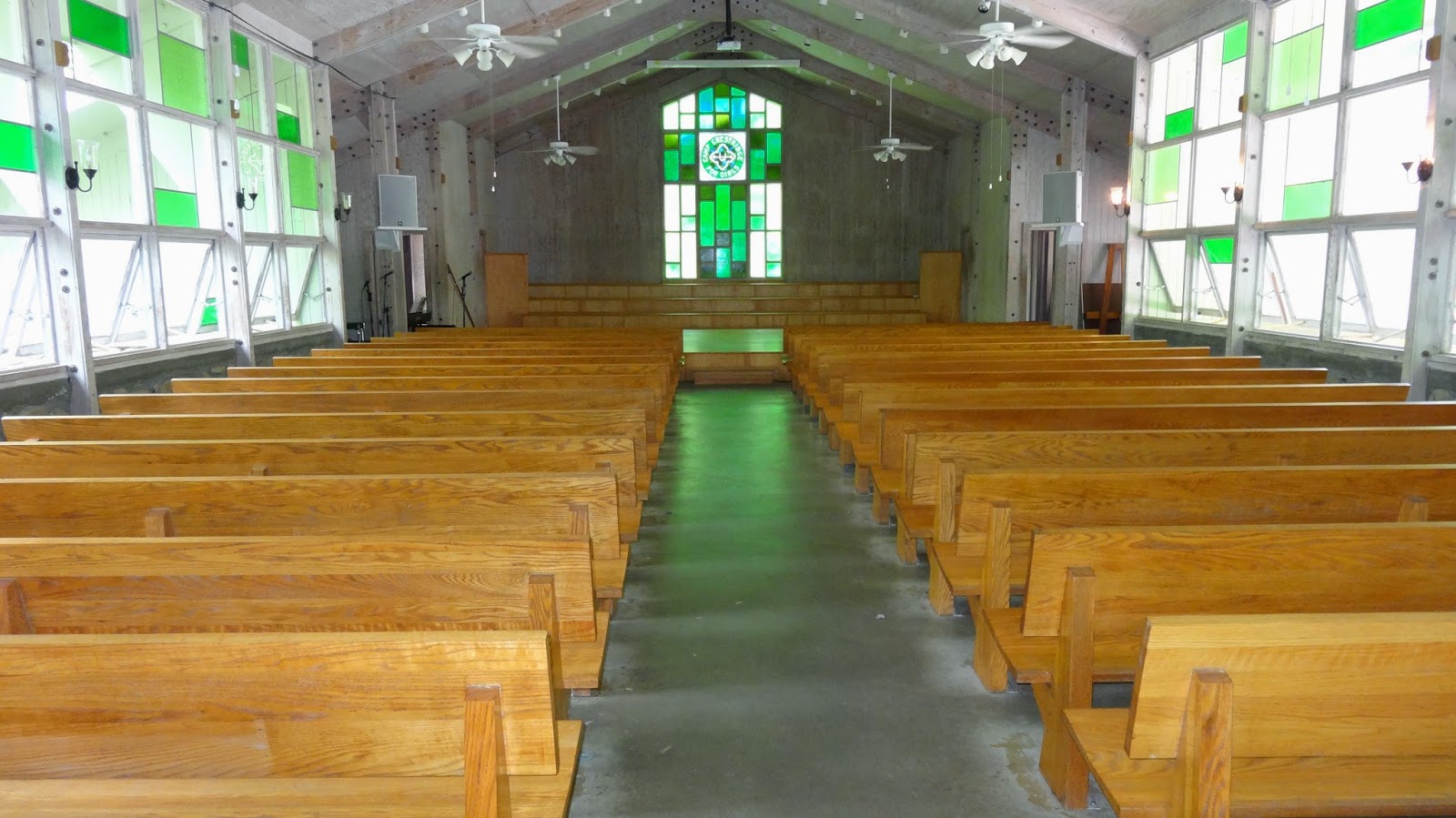
The chapel, beautifully adorned with green and white stained glass.
Another extremely unique and beautiful structure was their chapel.  It was definitely a unique building, with a stunning stained glass focal point at the altar.  Renovations were also under discussion in order to accommodate the (growing) amount of campers.

The paint war is definitely a favorite!
I grew anxious as Sharon informed me about the next activity; something that I haven’t encountered at camp before: paint wars!  Each camper (there were about 70 on this day) is given a white t-shirt and as soon as the music starts, they completely let loose and throw washable paint onto each another.  And what is a paint war without a slip-n-slide?

Lastly, the most interesting building of all was the museum, which was only made possible by funds from alumni.  It contained miscellaneous collectibles from years' past.  What an everlasting way to remember history!

The museum that was built thanks to numerous alumni donations. 
Seeing the youth, especially young girls, bond with one another and create new friendships is surely refreshing.  Merely being in their presence evokes a smile that you can’t quite replicate anywhere else.  The positive and judgment-free atmosphere is contagious.

Extending my deepest gratitude to Sharon and Camp Crestridge is the least that I can do for allowing me a taste of their way of life, and I wish them all the best. Next stop: Camp Ridgecrest!


Thank you, Camp Crestridge!
-The Girl with the Red Umbrella

Monday, July 7, 2014

Camp Illahee: The Land of Jolly Fun

My introduction to Illahee actually started before I even set foot on the 110 acre site. It began on Dolly's front porch, where I was soaking in the mountain summer night.  For those of you who don’t know Dolly, Her Ice Cream is nothing short of a legend in Brevard. Of course there are the standard flavors: (chocolate, vanilla, strawberry, etc.) but there is also High Rocks Arctic Slide, Illahee Swirl, Kandalea Avalanche, Keystone Sunrise, Merrie-Wood Boo-Woop, Pinnacle Paradise, Pisgah Perfection.. the list goes on. Each local camp has its own specialty flavor. Yes, yes, ice cream is amazing, but I digress. 

I was sitting on Dolly’s front porch, in a rocking chair enjoying my Music Camp waffle cone (read: coffee ice cream filled with cookie pieces, a touch of coffee swirls and just the right amount of chocolate flakes), when two buses filled with about 40 Illahee campers pulled up. The girls, in their PJs, were out for a late-night treat. Their smiles, genuine happiness and excitement was contagious.

So when I arrived at camp Illahee, I already had some idea of the magic in the air. I met Kris, the assistant camp director, who led me around the camp. Near the entrance are Illahee's tennis courts. Now, these are not you average camp courts; these are the real deal. Equipped with ball carts and automated feeding machines, and a fierce tennis program, there is always a match being played.


As we continued our tour, we stopped by the craft shop in full swing. Girls were working on everything from pottery to bracelets. Making our way across camp, I hear shrieks of joy as campers zip down the zip line. The zip line and high ropes course starts about 50' in the air from the climbing tower known as the Beanstalk. Cabins are scheduled for the Beanstalk once a session. This is a great opportunity to build confidence and cabin community. Another unique feature at Illahee is the tunnel. This tunnel allows campers to safely cross under the camp's main road. The tunnel is approximately 7 feet tall. What a creative solution to cross the road!

In truth, I think the camp welcome song describes the camp's energy and joy quite nicely.

"Welcome to Illahee
the mountains echo welcome to thee
Where bowers of flowers that bloom in the sun, old campers, new campers, guests and everyone,
Oh welcome to our land of jolly fun,
We are happy you have come,
To our guest we'll give a cheer!
Welcome welcome welcome! HEY!"

Camp Illahee is focused on developing girls with 5 essential qualities: confidence, conviction, integrity, faith in God and abiding respect for the natural world and all its wonders. And it shows through the welcoming nature, the magic in the air, and the sound of singing carrying across the lake -- it's all here at Illahee.

-Girl with the Red Umbrella 

Wednesday, July 2, 2014

Did You Wash Your Hands?

This is possibly one of the most asked questions by a camp counselor. Coincidentally, it's also the most lied about answer.So what’s the solution? How do you get kids to wash their hands before meals?

After a summer of the Norovirus or the infamous swine flu, many camps have taken a second look at their hand washing procedures. The trouble is trying to make this process as efficient as possible. From a programmatic perspective, some camps have built in a specific time block, usually 15 minutes before meals, for hand washing. This works well if groups are on time to the bathhouse, but can prove to be logistically difficult to accomplish. Using hand sanitizer is a faster solution that many camps have adopted. It’s certainly good in a pinch, but studies show that this is not a replacement for hand washing.

The best solution  we’ve seen at many camps is to create a hand washing station outside the dining hall, where campers queue before meals.  This efficiently combines program without wasting time. It's also a great chance to keep an open mind and creative when imagining what a sink can be. Check out these innovative ideas below from camp Timberlake, Gwynn Valley, and YMCA Camp Greenville.


Hand washing at Camp Timberlake
With creative design solutions like these, you can be sure that kids will want to wash their hands!

Hand washing at Gwynn Valley
Hand washing at YMCA Camp Greenville


Wednesday, June 25, 2014

"We Need To Talk"

The Start of a Great Relationship…

A Page from Greg's Sketchbook


Domokur Architects has over 40 years of camp experience, with creative lead Greg Copeland leading the charge.  With years of experience and great relationships with camps across the country, we could all learn a thing or two from Greg!  I had the privilege of hearing about one particular encounter between Greg and Len McCandliss, former CEO of Sierra Health Foundation, that happened in March of 1999. The story goes something like this...

They were both attending the ACA West Conference and Len actually approached Greg -- he said, “We need to talk.”  His plan was to create a special needs camp on the land he had purchased near Nevada City, California, and he requested Greg’s evaluation of the site.  After carefully examining the area, Greg was extremely concerned about Len wanting to building on a wetland, as well as the fact that there was limited development space.

In February of 2000, Len contacted Greg once more and told him about another piece of land that he had purchased near Portola, California.  Len wanted another evaluation.  Despite the unfortunate condition of the last site, Greg thought that this site was promising.  He felt the 466 acres of land was beautiful and perfectly suited for a camp.  Greg only had one wistful comment: “I wish you could buy the adjoining land next to the area that we had identified as the best location for the camp.”  When Len asked why, Greg suggested that he would mirror the plan so that the dining hall overlooked the meadow.  Len’s reply was, “Well, you better get started!”  That moment marked the beginning of a new friendship.  With the master plan complete in 2001, and design work complete in 2002 by a local architecture firm, Grizzly Creek Ranch was able to officially open in 2003.

Since opening, Grizzly Creek Ranch has had the privilege of working with nonprofit organizations serving diverse populations, such as students, teachers, people with special needs, and children considered at risk for a variety of social and economic reasons.  In 2010, the Sierra Health Foundation partnered with Sierra Nevada Journeys to create year round outdoor education opportunities. This camp focuses on providing a unique camp experience while encouragement, support, and growth are highlighted.  It is a place where kids with special needs can just be kids -- a place where they can create their own everlasting memories.

Grizzly Creek Ranch Master Plan
Tips From Greg's Sketchbook:

1. It's about building relationships.  Master planning takes time.

2. Have the courage to reevaluate.  In 1999 Len had already purchased the land in Nevada City. Little did he know the success he would experience in 2003, nearly two hours away in Portola.

3. Be flexible in design. The original plan did not consider the adjacent land. Once the additional property was acquired, the plan was mirrored, resulting in a beautifully situated dining hall overlooking the meadow.

Wednesday, June 18, 2014

Hello Muddah Hello Faddah


Original Post Office Boxes Salvaged From Lake Toxaway 
Post Office in North Carolina
Camp letters have a long history of being cherished. Whether they are simple sweet notes, telling of new accomplishments, or the attempted explanation of a crazy camp tradition, these letters are destined from the start to be stored in mothers' sock drawers for decades. 


Not sure what I mean? Click the link to view a particularly hilarious camp letter! This kid wrote the best letter from camp EVER!

The Mail Room at Windy
Gap Weaverville, NC
Often the camp mail room is off limits to campers, hidden in the back of the staff lounge or office. But why? Camp provides the opportunity for kids to practice the dying art of letter writing, so why not celebrate it! One camp does just this. Windy Gap in Weaverville, NC has designed their mail room to look like an old-time post office.

The Mailroom is a perfect opportunity for design creativity at camp. It also makes a great stop on a camp tour, creating a chance to explain to parents one more example of how attending camp can benefit their children. 

Monday, June 16, 2014

Gwynn Valley Camp: Sustainability at its Finest

Gwynn Valley Camp is located just south of Brevard, North Carolina in the Blue Ridge Mountains.  As the camp is renowned for its sustainability efforts, I was eager to see their green initiatives in action!  Anne and Grant Bullard, the two camp directors of Gwynn Valley, were kind enough to show me around the camp last week.  Anne and Grant have a strong passion for the outdoors, as well as for the intellectual growth of children, and these passions are evident throughout Gwynn Valley.  The rest of the staff comes from around the world – which makes for a diverse, inspiring atmosphere for the kids as they learn to develop appreciation for others as well as themselves.

Gwynn Valley's water mill supplies power all throughout camp.
The most visible sustainable initiative at Gwynn Valley is their historic water mill, which supplies energy to the camp.  Built in 1890, the mill is situated on the edge of a lake where a mountainside creek meets the lake.  The water running down from the mountains generates hydropower that is delivered to many of the camp buildings.

Four wood burners provide the camp with even more renewable energy.  The enticing scent of burning hickory and oak permeated the air throughout the camp – just an added bonus for being green!  Gwynn Valley uses these wood burners to heat up to 70% of their water.

Food production at Gwynn Valley Camp is also highly sustainable.  I was surprised to learn that Gwynn Valley grows up to 70% of their food on-site, including beef and eggs!  There is also a food mill that campers can use to grind corn into cornmeal – and better yet, to churn their own ice cream… YUM.  Currently Anne and Grant are searching for a solution for food waste disposal; they are exploring the option of using Black Soldier Fly Larvae to speed the food decomposition process – and afterwards, the nutrient-rich larvae can become a healthy meal for Gwynn Valley’s chickens.

Thoughtful design solutions, like the ones described above, were all throughout camp.  The walls of the horse barn were even designed to collapse to create winter storage areas for bikes and kayaks – simple, but clever.  And how could I forget the lightning detector?  Grant and Anne decided to invest in a lightning detector as a safety measure; this device can send a signal to the camp staff that alerts them when it is unsafe for outdoor activities.

The stable walls collapse,
enabling more storage.
My first visit was a success!
Thank you, Gwynn Valley!

Gwynn Valley Camp is clearly a place where the three pillars of sustainability (people, environment, and economy) come together. The camp offers a rewarding social experience for campers, earth-friendly initiatives that respect nature, and efficient practices that save time and money for the camp.  Learn more about Gwynn Valley Camp by visiting their website here!

- The Girl with the Red Umbrella


Thursday, September 27, 2012

Fieldwork Technology

Perfect for fieldwork! Keep a tight grip on your technology when you're on the move. Our camp planners all want one: the X-Band for iPad.